Tuesday, March 01, 2011

English Breakfast Tea Socks

I'm delighted to announce a new pattern, the English Breakfast Tea Socks! This pattern is the first in a 'Tea Time' themed series of patterns. The goal of the series is to explore tea time in all of its forms (afternoon tea, the morning cuppa, how tea-drinking varies by season, etc.). This first pattern represents the warmth and joy that the first few sips of tea bring to my day.


My inspiration for designing these socks was quiet mornings in wintertime, when no one else in the house is up yet. Armed with a sweater, a pair of wool socks, and a cup of strong black tea, I can enjoy a peaceful moment all to myself. In the half-light of a winter morning, this really is bliss.


The socks themselves echo this simple idea of tea time with a simple knit-purl stitch pattern. They are worked in KnitPicks Stroll (formerly Essential) on size 2 needles and are sized woman's medium. I've both written out and charted the stitch pattern, which is mirror-imaged between the right and left sock.


In addition to the pattern, all offerings in the Tea Time series will come with tips on brewing tea and a bonus recipe. This particular pattern offers tips for brewing these socks' namesake tea and a recipe for cherry granola, which is one of my favorite ways to start the day (besides the obvious cuppa).


You can purchase the pattern through Ravelry, as well as find more information there, or you can purchase it directly with this link for $5.

Questions? Contact me at brineydeepdesigns_at_gmail_dot_com!

Wednesday, February 23, 2011

Woolen

It has been a very exciting week here in Madison, Wisconsin, between all of the protests and me putting the finishing touches on a soon-to-be-released pattern. Honestly, the last thing I need right now is to write a serious blog post. So today I'm just going to celebrate my recent attempts at learning woolen spinning.


I don't know why I've been stuck spinning worsted for such a long time, especially since I recently waxed poetic about my love of carded batts from the shop Hobbledehoy. It turns out that it really is easier to spin batts woolen than worsted. And oh, I am so in love with the results!


Both of these skeins come from Hobbledehoy batts that were spun woolen and plied. I think I like the two-plies even better than other Hobbledehoy batts that I spun as singles, but that's a little like asking which is your favorite child--I love them all. Happily, I still have one more batt set left that will be used to learn core-spinning!

Wednesday, February 16, 2011

A Stitch In Time

I mentioned A Stitch in Time in my recent review of another vintage pattern book, and thought it was worth sharing more information about this beautiful book with you.


A Stitch in Time is a treasure trove of women's sweater patterns from the 1920's to the 1940's. The 50+ original period patterns were updated to be written in modern terminology and worked with modern yarns. Additionally, each updated pattern is beautifully styled and photographed, which is a major strength of this book.


In terms of the sweaters themselves, there are a huge range of styles from short-sleeved to long-sleeved, cardigans to pull-overs, lace to fair-isle. I also find the variety in sleeve styles particularly delightful, with several puffed-sleeved sweaters, liberal use of shoulder pads, and a particularly unique sleeve-construction in this sweater (Ravelry link).


I love this book for its depth of vintage sweater patterns and for being an never-ending source style inspiration. I've yet to find another sweater book with over 50 patterns; most have half that many. I should note that the number of patterns and the fact that the book is self-published are reflected in the price, which is about twice as much as other sweater books. Still, I believe that this book is a good value and that it's important to support independent designers.


If you're interested in this book, I encourage you to look into the second volume of A Stitch in Time that is coming out at the end of March. The new book covers the 30's through the 50's, and I can't wait to see all of the new patterns! Both the first volume and a pre-order of the second volume can be found at Knit on the Net.

Tuesday, February 08, 2011

Observe and Report

Being a scientist by training, there is nothing I like better than to observe and quantify. For example, in a previous blog post I chronicled how blocking improved pair of fingerless mitts by defining the lace pattern as well as smoothing out the stockinette portions. It was a interesting study and I thought I should follow up on it by examining how blocking fares with another knitting technique, fair isle.


The photo above compares a fair-isle glove before and after blocking. I can see a slight difference between the two in the cuff area, but I am surprised that blocking did not do more to clean up my uneven pattern stitches. I will have to pay more attention to the evenness of my stitches the next time I'm working in fair isle.


That's not to say that blocking didn't do anything. It actually smoothed out the surface of the knitting so that all of the stitches lay flat and aren't bumpy. If only for this textural reason, I think it's worth blocking my future fair-isle projects. At the very least I will block my next fair-isle item because I want the second glove to match the first!

Wednesday, February 02, 2011

Motivation

Motivation is a double-edged sword. I love being enthusiastic about a project to the point that I can't put the needles down, but it usually comes to the detriment of other long-term projects I'm working on. I get especially motivated at the beginning of a project, and as much as I plan and try to pace myself, I still ride these motivational highs and lows. The cycle started all over again this week when I started seriously working on my PhD quilt.


There was lots and lots of cutting this week, and even a little bit of sewing, but absolutely no knitting. (At least this means that my sewing machine is finally working correctly. It turns out that you actually need to change the needle from time to time. Oops.) In addition to experiencing new-project motivation, I can't stop working on the quilt because its happy colors are counteracting the gloom of the snowpiles currently outside my window. Is it Spring yet?


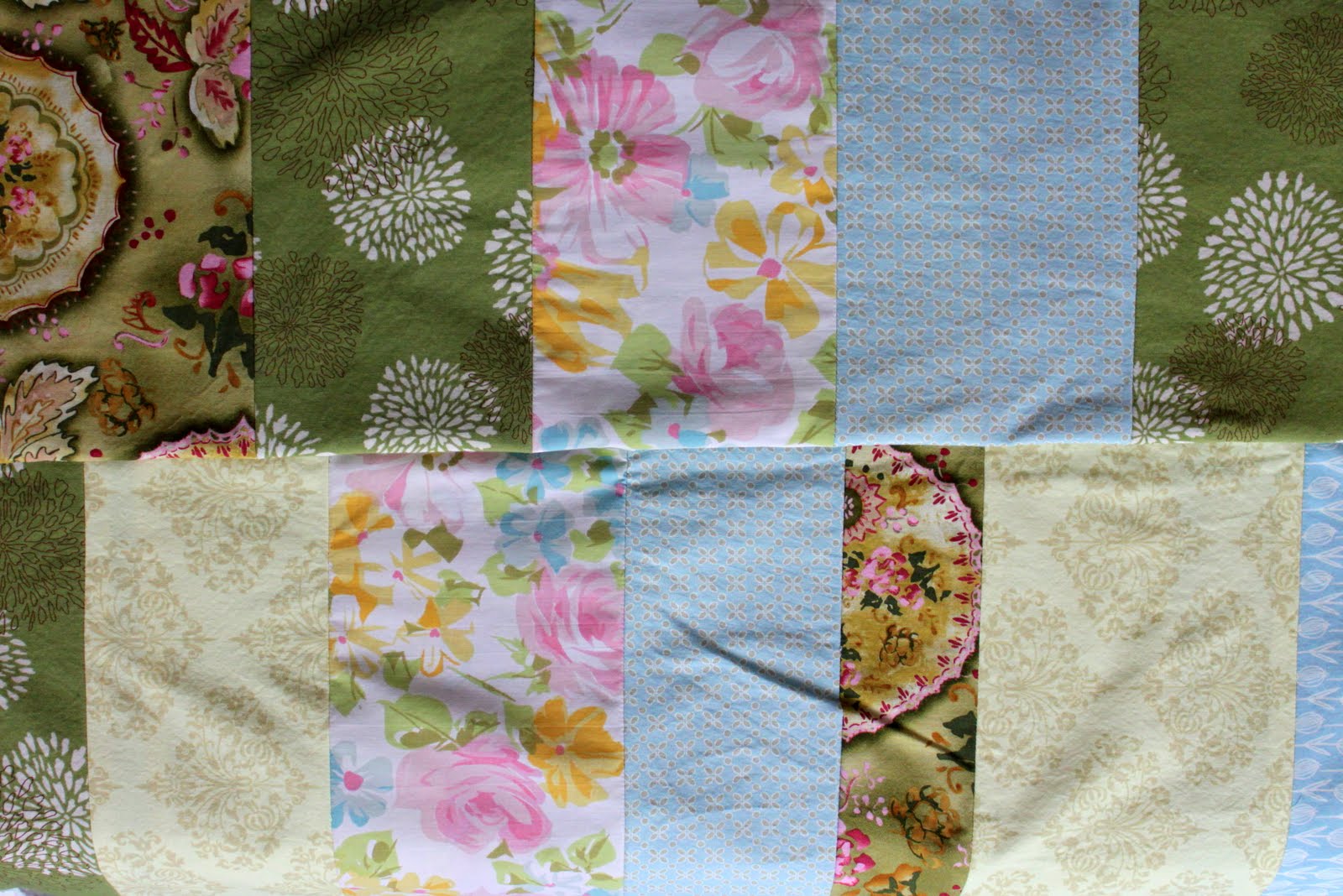
As this is my first quilt project, I'm doing a simple design that requires no complicated piecing. The photo above gives a sample of the effect I'm going for, though there will be many more strips in the final quilt-top. I haven't thought about what I'll do after I finish the quilt top, but from the way things looks so far, I doubt that I will loose my enthusiasm for this project anytime soon.

Wednesday, January 26, 2011

Phat Fiber

Have you heard of Phat Fiber? Every month, Phat Fiber offers a box of handmade yarn and fiber samples from a range of online vendors. The contents of each box are a surprise beyond the theme of the box and having the option to buy a fiber-only box, a yarn-only box, or a mixed box. It is an exciting mystery as to what will show up at your door.


Though I heard about them a while ago in the Spring 2009 Knitty, I bought a Phat Fiber box for the first time in January. I was particularly attracted by this month's theme, Chinese New Year, though I'm also at the point in my spinning where I want to experiment with different types of fiber. A fiber-only box was the perfect way to get samples of a range of fibers from a variety of hand-dyers and hand-carders.


The box did not disappoint. It was very interesting to see how the contributors interpreted the box's theme by sending samples of silk, angora (for the year of the rabbit), dragon-inspired colorways, or even just packaging things in red paper sleeves covered in Chinese symbols. While all of the samples are under 1 oz, I am looking forward to trying some new things out--especially the silk hankies and the silk top!


Beyond the fiber, I also received 2 knitting patterns, several stitch markers, a pair of earrings (below), and a number of coupons from vendors who didn't contribute fiber. I recognized some of the shops, but it was nice to be aware that there is such a big community of hand-makers out there.


Overall, I would have to say that I enjoyed getting this box but I won't be making this a regular purchase. At $36 per box (including shipping) it's worth buying once to expand my fiber horizons and awareness of hand-dyers, but in the future I'll be spending my money on larger lots of fiber in colorways I choose.

Tuesday, January 18, 2011

A Pair of New Knitting Books

I added two new knitting books to my bookshelf in December; the first, Stitch 'n Bitch Superstar Knitting, I bought for myself and the second, The Ohio Knitting Mills, came to me as a Christmas gift from my sister. They are both excellent books and it's worth telling you a little bit about them.


I've raved about the Stitch 'n Bitch crochet book in a recent post and I have to say that this new Stitch 'n Bitch book is even better. Unlike the previous Stitch 'n Bitch books, this book covers advanced knitting techniques, giving pointers on everything from fair isle and lace to cables and designing your own sweaters. Everything is covered so well that even more experienced knitters will learn a new trick or two here.


While this book discusses more advanced techniques than the other Stitch 'n Bitch books, the creative and varied selection of patterns are just what I expect from this series. The patterns themselves build upon the techniques discussed in the first part of the book and include socks, sweaters, blankets, gloves, hats, and even a pair of beautiful skirts. I was also happy to see a few previously published patterns in the pages of this book, including Ysolda's Gretel hat, Elli Stubenrauch's Squirrelly Mittens, and Elena Rosenberg's Rococo Shawl (above).


The new Stitch 'n Bitch book is worth buying for the patterns and the useful information on advanced techniques, but it's the chapter on designing your own sweaters that really makes this book a keeper. This chapter cover a variety of sweater constructions and customizations, as well as how to work out the math for these designs. While this information can be found in other books, such as those by Elizabeth Zimmermann and Barbara Walker, this Stitch 'n Bitch book's lighthearted writing style makes sweater construction accessible to the modern knitter.


Now that I've waxed poetic about the first book, let me move on to the second. The Ohio Knitting Mills chronicles the history of the Rich-Sampliner Knitting Mills Co. the Ohio Knitting Mills in Cleveland, Ohio and focuses on its sweater designs from the 1940's through the 1970's, providing modern patterns for these vintage styles. This selection of 26 sweater patterns for men and women is brightly colored and sometimes kitschy, but really captures the style of these four decades.


I love looking at vintage pattern books to see how styles change over time and sometimes come back into fashion. I'm happy to add this book to my knitting collection alongside my other vintage pattern book, A Stitch in Time, which covers the 1920's through the 1940's. I will have to review that book in a future post because it is also a really lovely book. In the meantime, I will be enjoying lots of vintage inspiration!